NebuliSr.

Medical Product Design

Pitch Project

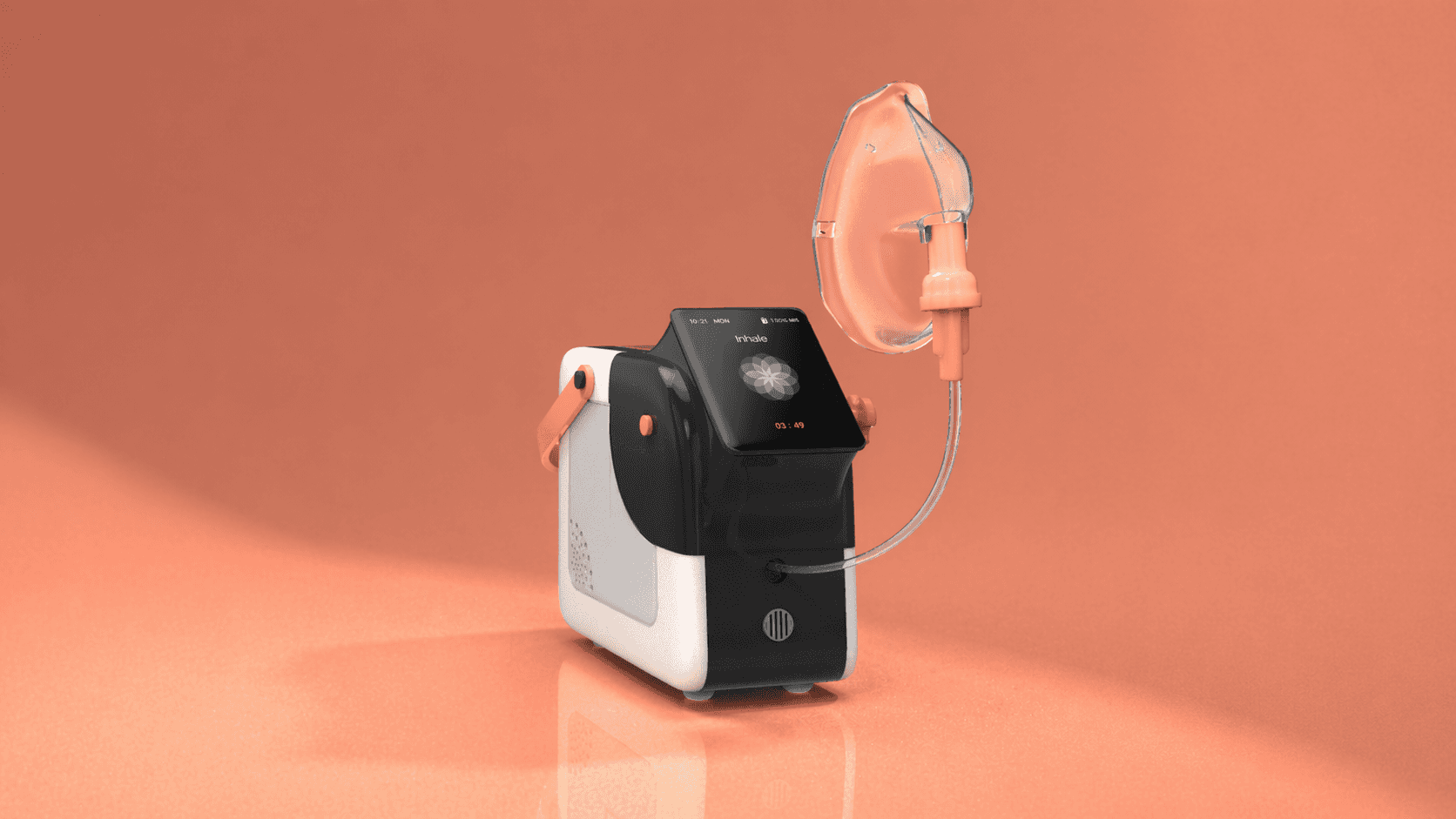
For many elderly patients, using a nebulizer is not just a routine, it’s a struggle with complexity, dependency, and uncertainty.


This project reimagines a standard Nebulizer as a simple, intuitive companion that empowers senior citizens to manage their treatment independently, with effortless setup, clear feedback, and optimized medication delivery.
Understanding the Gap

Breaking down the problem before solving it


I began by studying the nebulizer across three lenses - product architecture, real-world usability, and competitive offerings. While existing solutions focused on performance and form, a clear gap emerged in usability. The challenge wasn’t just how the device worked, but how it felt to use, especially for elderly users.


The focus became designing a nebulizer that carries out the entire process with minimal assistance and hassle-free assembly while also monitoring the breathing rate to maximize the delivery of the medication for elderly patients.


Understanding the Gap

Breaking down the problem before solving it


I began by studying the nebulizer across three lenses - product architecture, real-world usability, and competitive offerings. While existing solutions focused on performance and form, a clear gap emerged in usability. The challenge wasn’t just how the device worked, but how it felt to use, especially for elderly users.


The focus became designing a nebulizer that carries out the entire process with minimal assistance and hassle-free assembly while also monitoring the breathing rate to maximize the delivery of the medication for elderly patients.

Understanding the Product

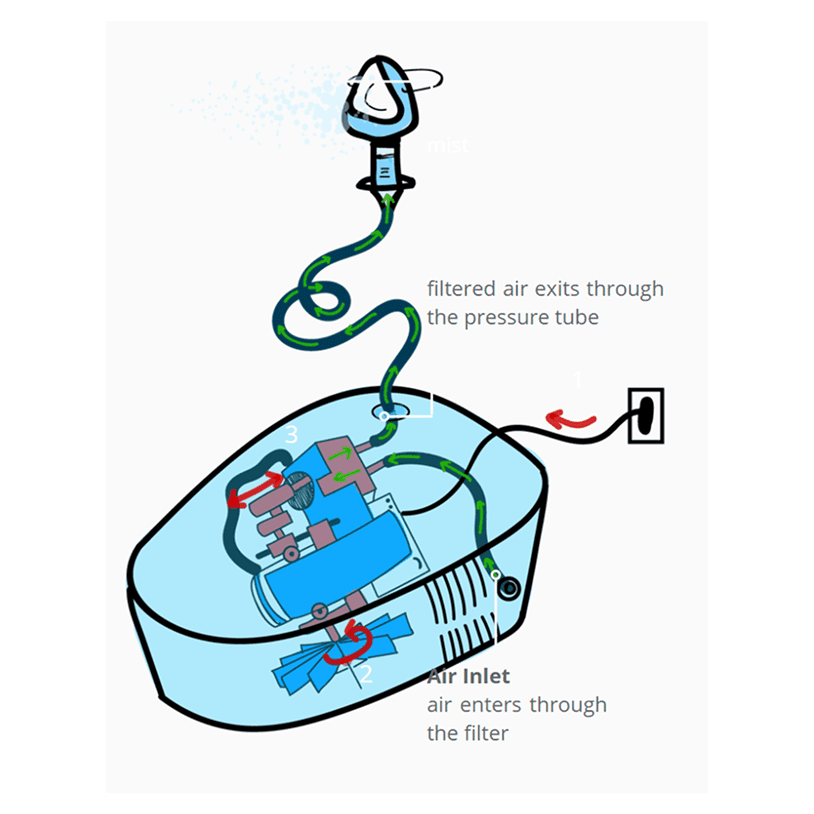
The device is engineered for functionality, but its architecture makes setup, handling, and maintenance unnecessarily complex for everyday users.

Understanding the Usability

The biggest friction isn’t in using the device, but in assembling, holding, and managing it independently especially for elderly users.

Understanding the Competition

Existing solutions focus on performance and portability, but consistently overlook intuitive interaction and ease of independent use.

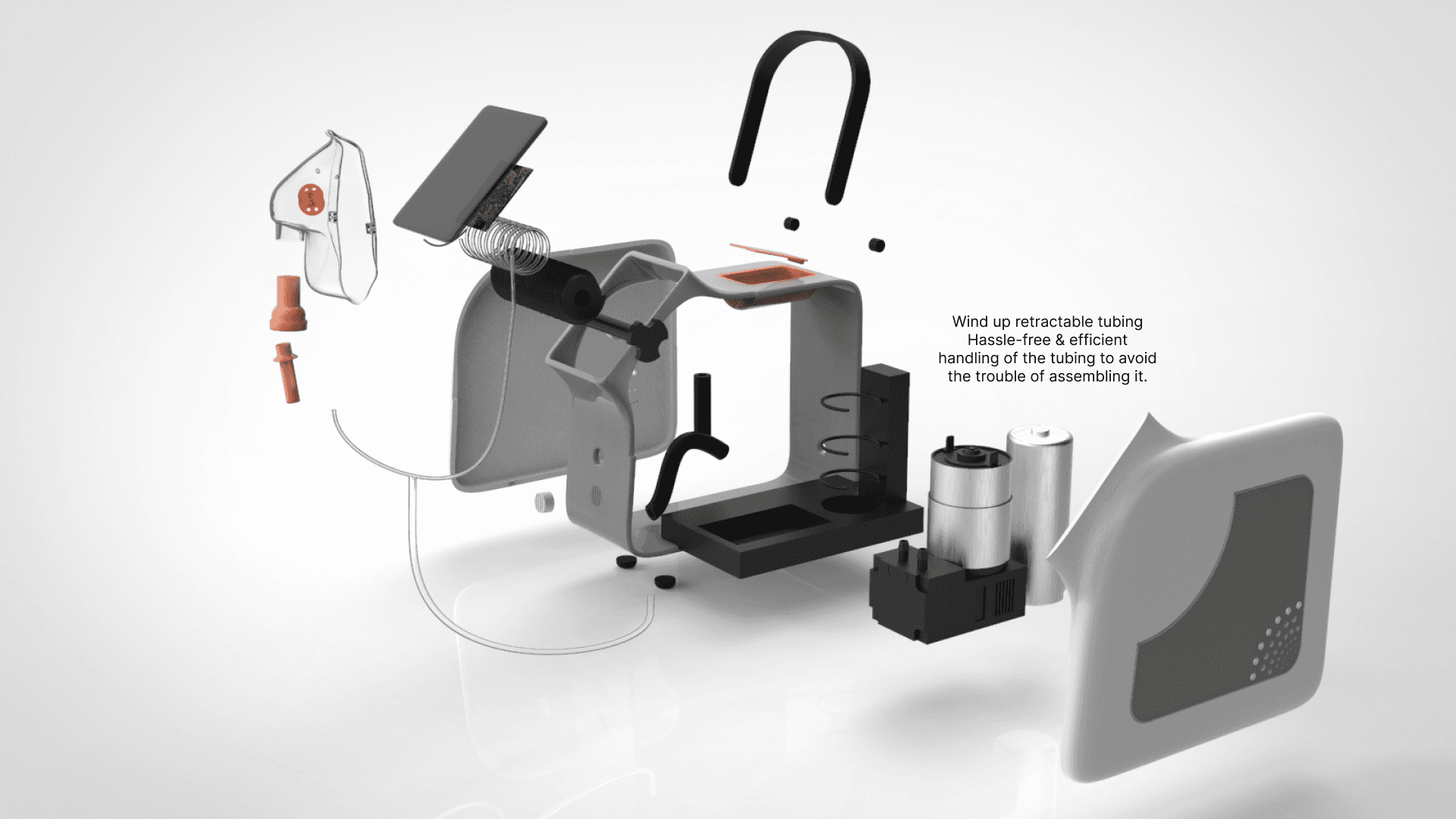
By breaking the nebulizer into its core components, I uncovered the true burden on the user - multiple parts, unclear assembly, and dependency on correct sequencing. What should be simple becomes overwhelming. This highlighted the need to reduce complexity and create a more intuitive, guided interaction.


Building on key insights, the ideation phase focused on exploring a wide range of ideas across form, interaction, and system design. Rapid sketching and concept generation helped uncover opportunities to improve usability, simplify assembly, and enable independent use, expanding the solution space before narrowing down to the final direction

Designing with Clarity

From complexity to coherence


The final design resolves these insights into a simplified, user-centric system. Fewer parts, clearer interactions, and thoughtful integration ensure ease of use and independence. The technical layout reflects this intent, transforming a complex device into an intuitive experience.

UI Screen Kit


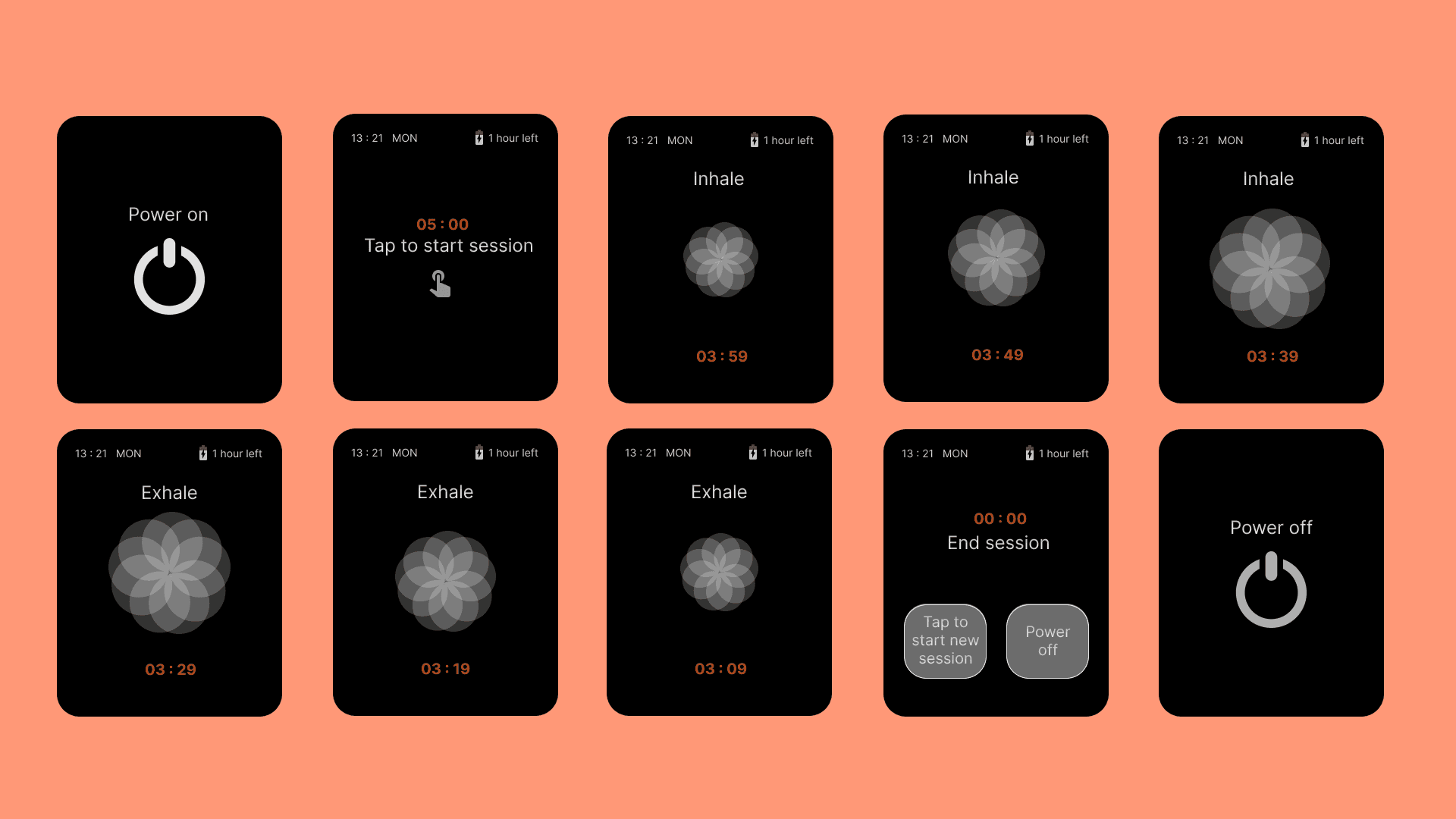
The display screen will assist the senior age group patients in monitoring the rate of breathing by displaying minimal and easy to understand animations hence increasing the effectiveness of the process.

  • Additionally the screen will also display a 4 minute session timer and other information such as the battery percentage and clock on the top.

  • The display style is minimal, sleek and user friendly so that to reduce the learning curve.

UI Screen Kit


The display screen will assist the senior age group patients in monitoring the rate of breathing by displaying minimal and easy to understand animations hence increasing the effectiveness of the process.

  • Additionally the screen will also display a 4 minute session timer and other information such as the battery percentage and clock on the top.

  • The display style is minimal, sleek and user friendly so that to reduce the learning curve.