System Design - Sustainable Packaging
Link to the case study
Client - Chuk (Pakka Papers)
With Therefore Design
Creating a range of disposable tableware made from Bagasse
Working on Chuk, India’s leading sugarcane-based tableware brand, allowed me to design within a system that balances performance with sustainability.
Made from bagasse and free from toxins and chlorine, Chuk’s range reimagines everyday food packaging as both durable and environmentally responsible.
At Therefore Design, I contributed across multiple projects, from meal trays to clamshell containers for the US market.
My role spanned research, prototyping, and validation, giving me a real-time understanding of the industry’s pace and the need to constantly adapt while staying grounded in practical design decisions.

Identifying the gap
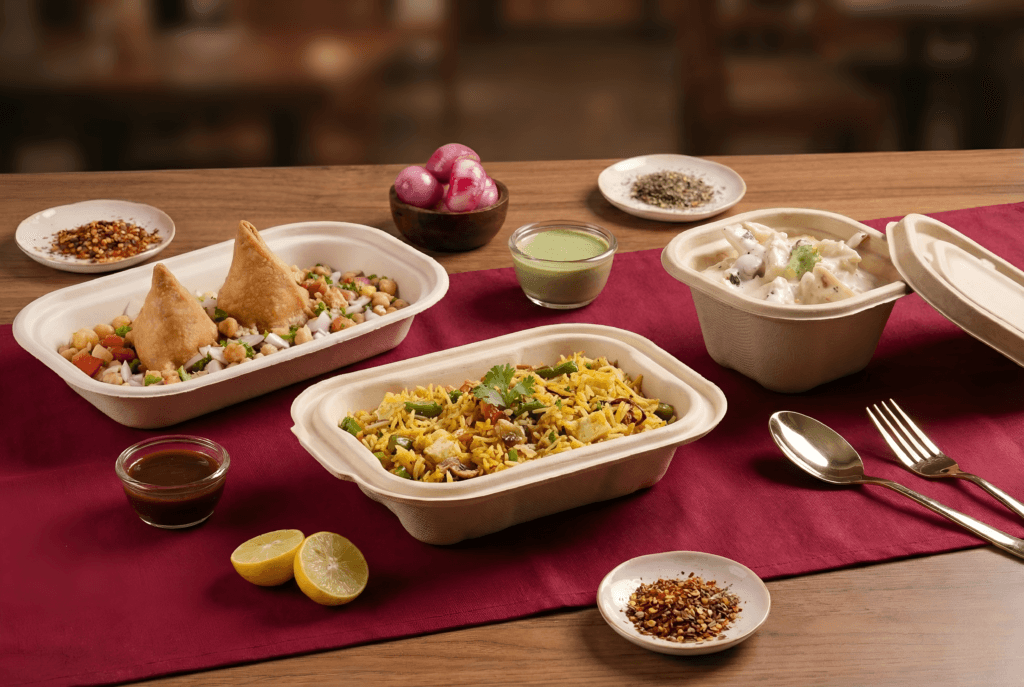
The material itself had potential, but the real challenge was making it practical for Indian eating styles and scalable for QSR (Quick Service Resturants) operations which mainly used products made for the western market.
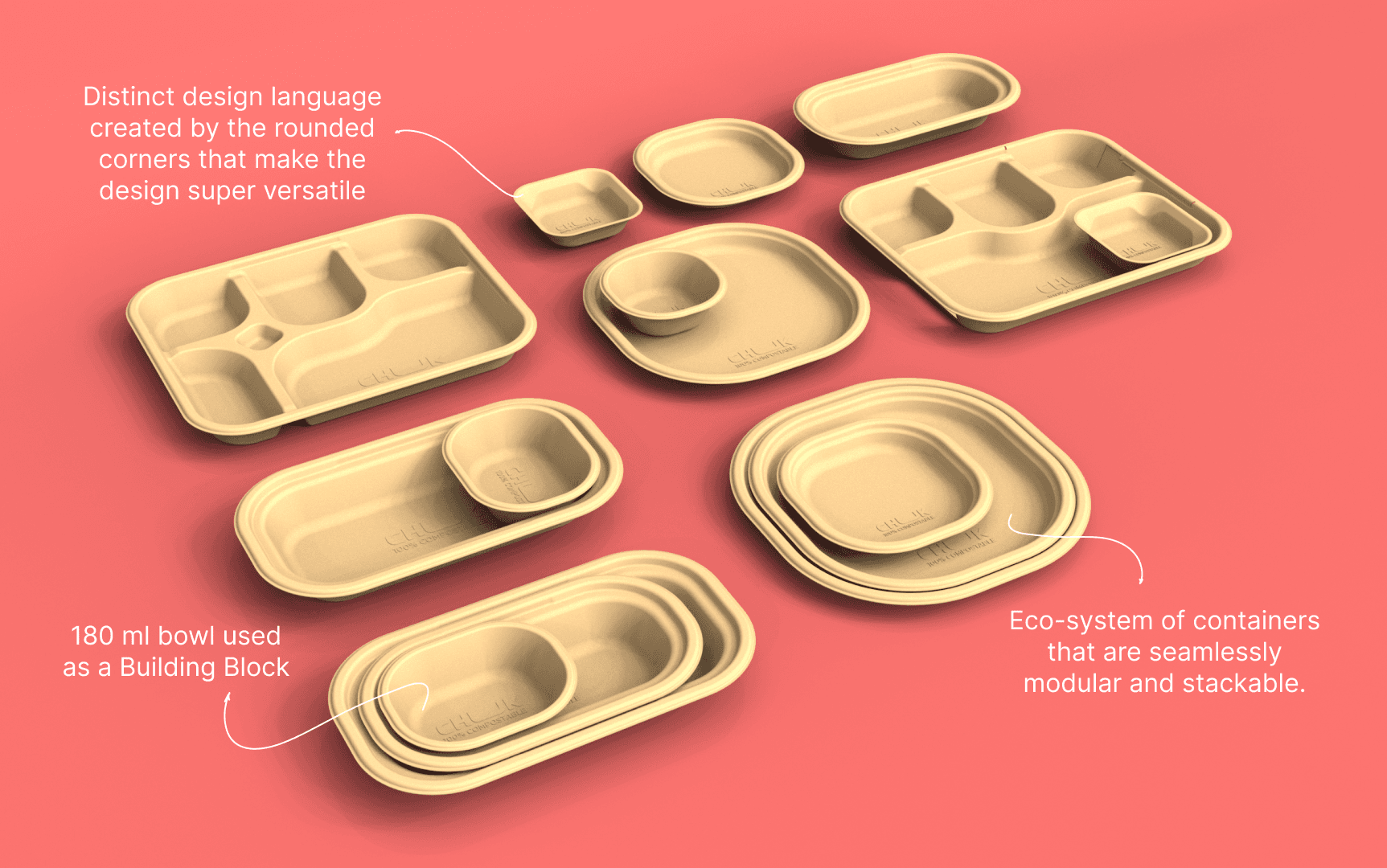
Our role was to reimagine the entire product ecosystem, not just a single plate or bowl, but a cohesive family of products that could handle the variety of Indian food, pair well with each other, and be easy to source and stock
Our first task was to identify a target segment who would be early adopters for the product. We zeroed in on QSRs for the same for the following problems observed -
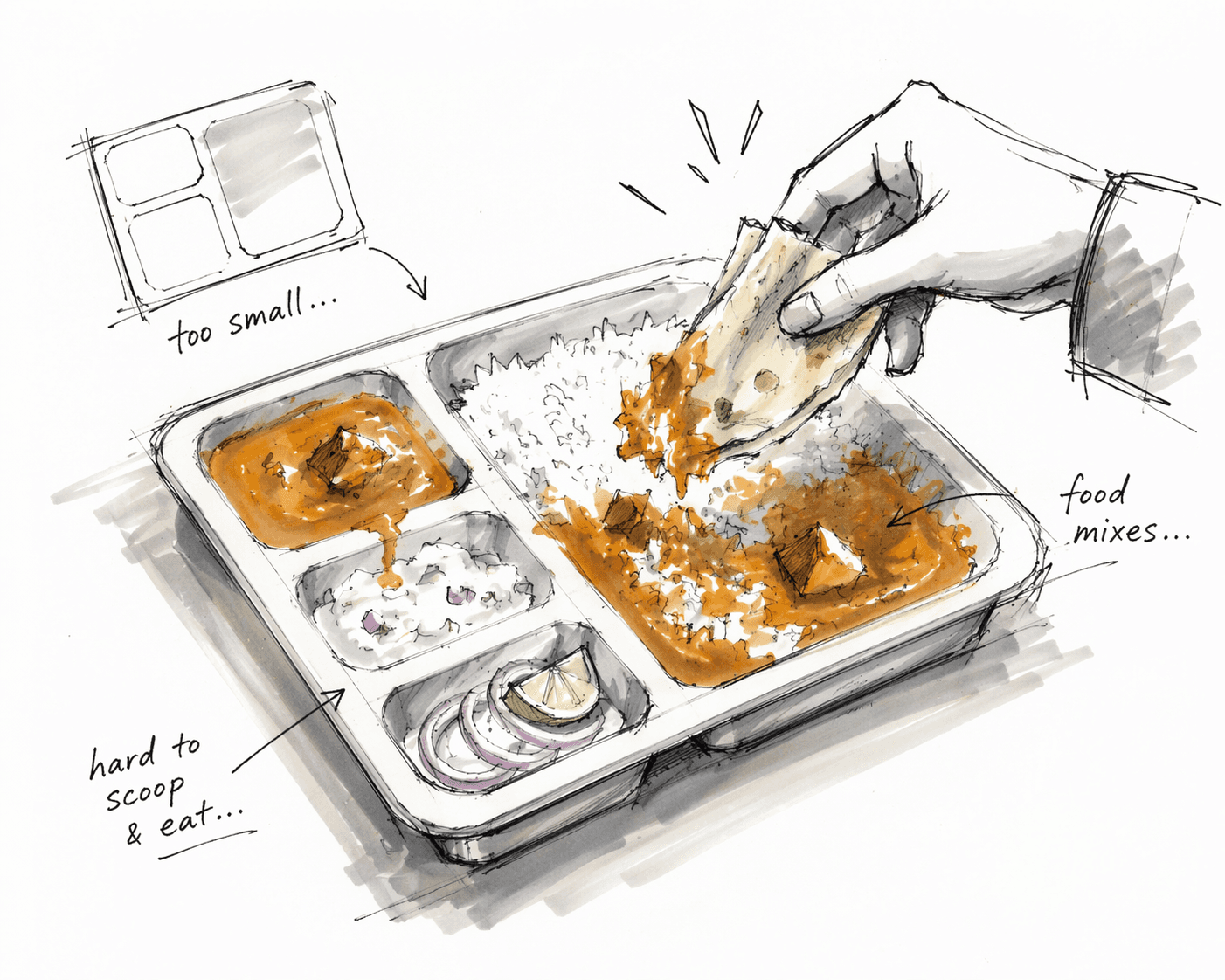
Not convenient to fill and eat in the existing solutions

Unavailability of a homogeneous family of products

No solution catering to the wide variety of food on offer

The Process
All CHUK products weren’t designed in isolation but were built through constant movement between the real world and the design table.
I started by stepping into actual usage environments, observing how disposable packaging behaves under pressure and where it fails. These insights quickly translated into rapid sketches and explorations, pushing multiple directions before narrowing down.
From there, I moved into detailed modelling, refining proportions, usability, and manufacturability in parallel.
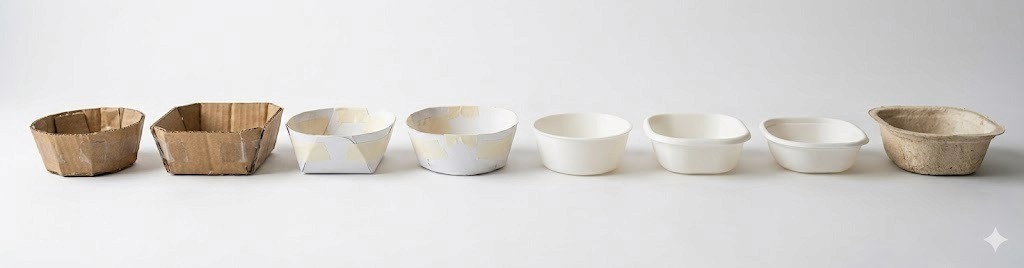
Prototypes played a critical role, from low fidelity paper prototypes to 3D printed version and then their sample molded prototype, each version was tested, questioned, and iterated on until the solution felt inevitable.
The result is a product shaped not just by design decisions, but by continuous validation, feedback, and refinement.


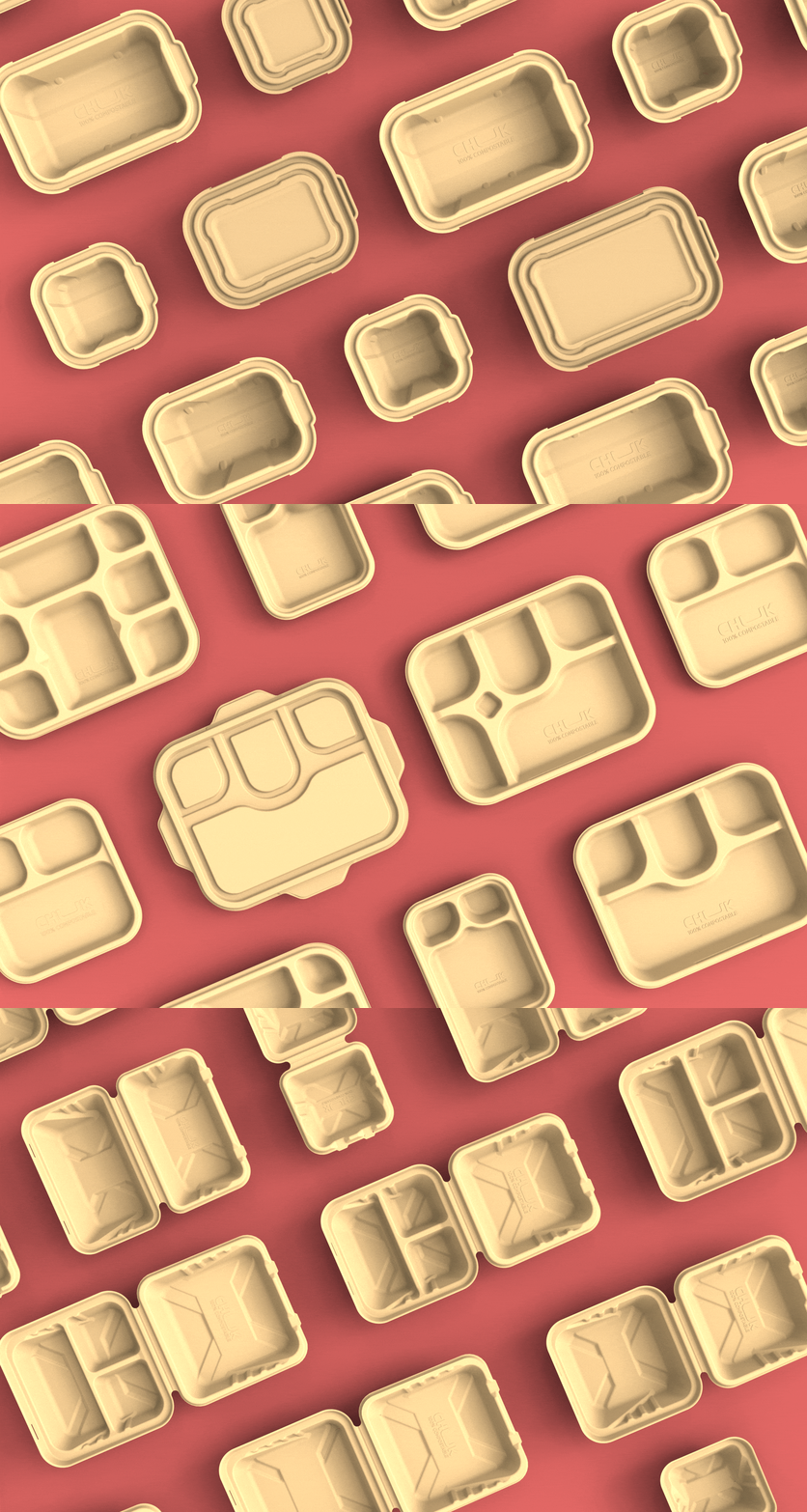
The CHUK system evolved as the market matured, expanding to include new products such as nachos trays, beverage cups, and Dona bowls.
The design language ensures coherence and modularity across categories without losing identity.

3CP Clamshell Container
Designed specially for the Western market where Take-away culture is common.

750 ML Dine-in Container
Designed specially for QSRs to serve One Pot Meals like Rice Bowls and Salads.

3CP Dine-in Meal Tray
Designed for QSRs where food is served in disposal containers for quick and hassle free service.

The 180 ml bowl was used as a building block for the Modular System
The dimensions for the bowl were derived considering following factors -
Indians like to eat some varieties of food with hand and thus the available volume needs to allow for fingers to dip into the bowl
Using a metal spoon without the fear of the bowl tipping over when at rest even when the bowl is empty
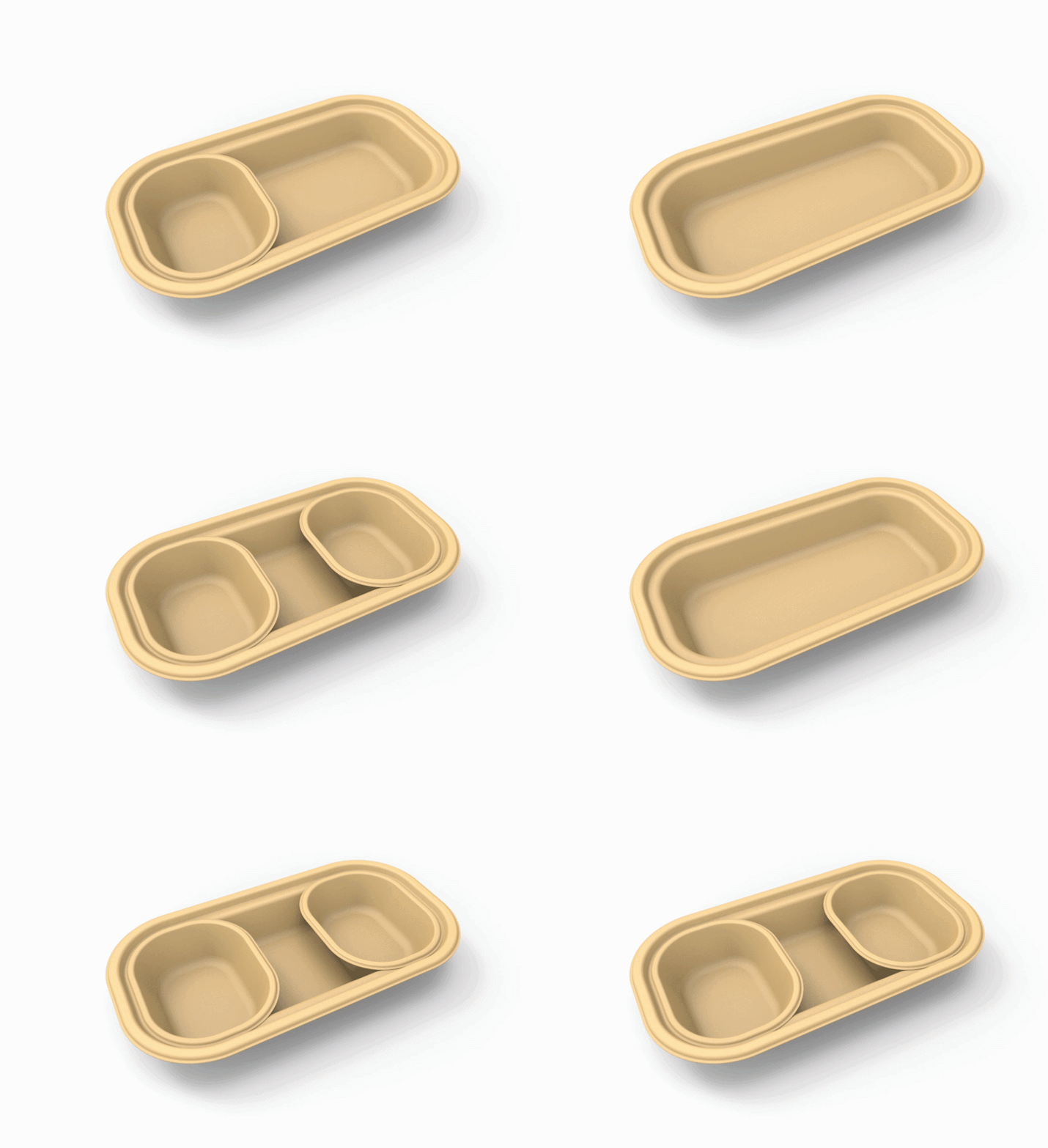
180 ML bowl with 500 ML Delivery Container

180 ML bowl with 11" Plate

180 ML Bowl with 4CP Meal Tray